Kanya Kelavani Rath Yatra: A Noble Initiative for Girls’ Education in Gujarat
Introduction
Education is not just a fundamental right; it is the foundation of progress, empowerment, and equality. Among the various initiatives launched to promote education in India, Gujarat’s Kanya Kelavani Rath Yatra stands out as a unique and impactful program that has changed countless lives. Launched by the Government of Gujarat, this campaign specifically focuses on promoting education among girls, especially in rural and underprivileged areas.
In this article, we will explore the origin, objectives, impact, and continued relevance of the Kanya Kelavani Rath Yatra. We’ll also dive into how this initiative aligns with India’s broader goals of achieving gender equality and universal education.
What is Kanya Kelavani Rath Yatra?
The Kanya Kelavani Rath Yatra (translated as Girl Child Education Chariot Journey) is a state-wide educational campaign initiated in 2003 by the then Chief Minister of Gujarat, Shri Narendra Modi. It was aimed at creating mass awareness regarding the importance of educating girl children.
This Yatra involves specially designed rath-like vehicles (chariots), which travel across villages and districts, disseminating educational materials, information, and inspiration. These mobile vans are equipped with audio-visual aids, booklets, and posters, highlighting the value of education and the specific benefits of educating girls.
Objectives of the Kanya Kelavani Campaign
The Kanya Kelavani initiative was not just symbolic—it was purpose-driven. Here are the primary objectives:
1. Increase Girl Child Enrollment in Schools
One of the major challenges in rural Gujarat was the low rate of girl enrollment in primary schools. Social taboos, poverty, and gender bias often prevented girls from attending school. The Yatra directly addressed this by creating awareness among parents and communities.
2. Reduce Dropout Rates
Even if girls enrolled in school, many dropped out after a few years, especially during adolescence. The Rath Yatra encouraged families to keep their daughters in school by highlighting success stories and government support schemes.
3. Promote Gender Equality
By advocating for girls’ education, the campaign played a critical role in changing traditional gender roles and empowering women through education.
4. Involve Local Leadership
The campaign encouraged participation from local leaders—MLAs, district officers, and sarpanches—who traveled with the yatra, addressed gatherings, and personally encouraged parents to send their daughters to school.
Key Features of the Rath Yatra
1. Statewide Coverage
The Rath Yatra covers all districts of Gujarat, including tribal and remote areas, ensuring that no region is left behind.
2. Community Participation
Community events, school rallies, folk performances, and street plays (nukkad natak) are organized alongside the Yatra to draw public attention.
3. Multimedia Messaging
Videos, songs, and live speeches are used to convey messages in an emotional and compelling manner, touching hearts and changing minds.
4. Convergence with Other Schemes
The Yatra promotes awareness about schemes such as:
- Vidyalakshmi Bond Scheme
- Free uniforms and textbooks
- Midday Meal Scheme
- Cycles for school-going girls
- Scholarship programs for SC/ST and BPL families
Success and Impact Over the Years
The campaign has delivered remarkable results since its inception. Here are some statistics and real-life impacts:
📈 Enrollment Rates
According to government data, girl enrollment in primary schools increased from 88.57% in 2001 to nearly 100% by 2010.
📉 Dropout Reduction
Dropout rates among girls have significantly declined, especially in the age group of 6–14 years.
👩🎓 More Girls in Higher Education
Encouraged by early education, a larger number of girls are now enrolling in secondary and even higher education, leading to a more educated female workforce in the state.
🧑⚕️ Success Stories
Many beneficiaries of the campaign have gone on to become teachers, nurses, police officers, and even engineers. Their stories are shared during later Yatras to inspire others.
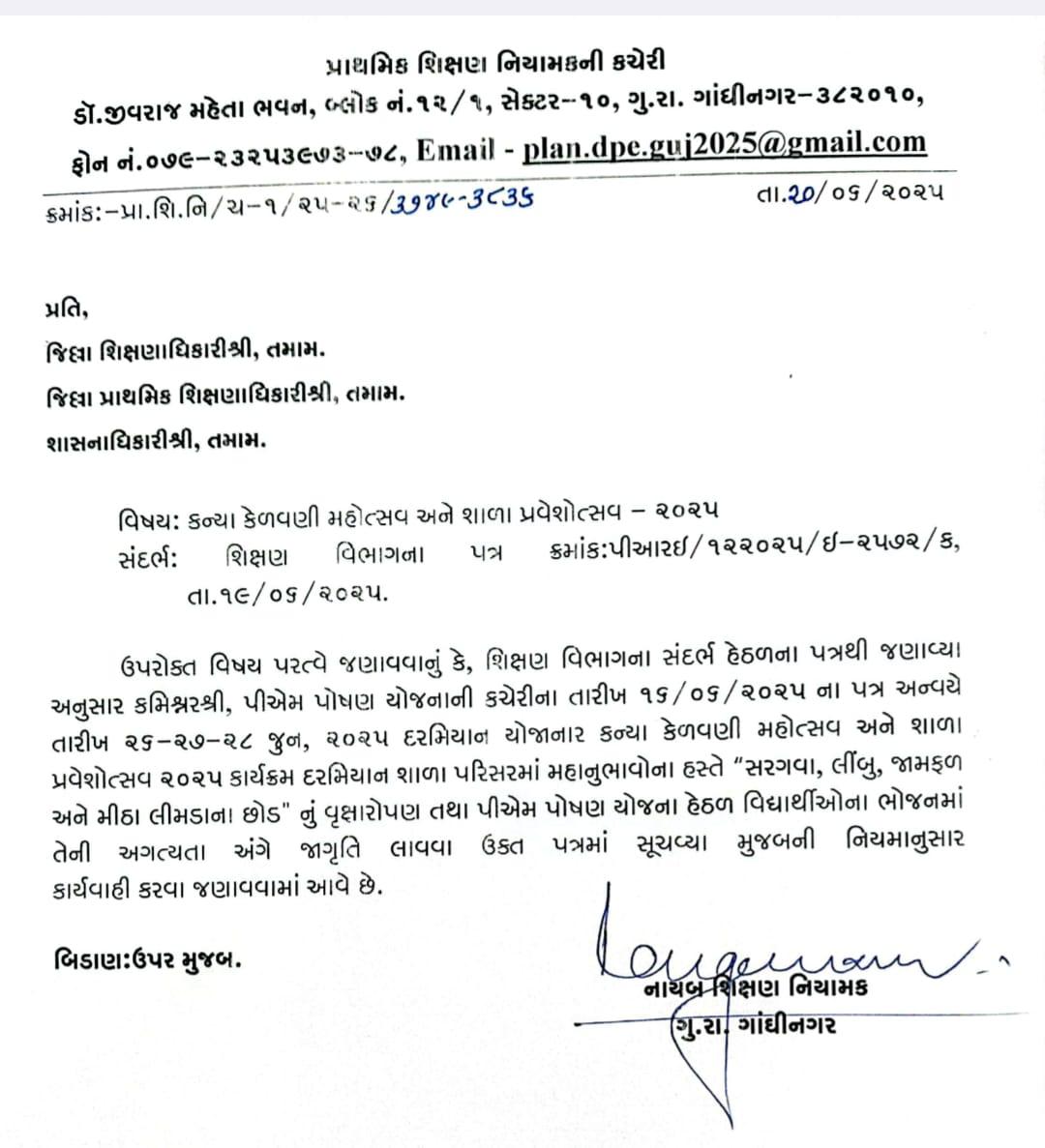
Kanya Kelavani Week and Shala Praveshotsav
The Kanya Kelavani Yatra is often aligned with the Shala Praveshotsav—a statewide program to celebrate school admissions. During this week:
- Ministers, IAS officers, and MLAs visit schools.
- They motivate students and parents, distribute school kits, and inaugurate new classrooms.
- New admissions are celebrated like festivals, creating positive memories for young learners.
Role of Technology and Innovation
In recent years, the campaign has embraced digital tools:
- Live broadcasts of Rath Yatra events
- Mobile apps for tracking school attendance
- Digital classrooms and e-learning content
- YouTube campaigns and social media messaging
These innovations have helped keep the campaign relevant and effective, especially during and after the COVID-19 pandemic.
Societal Transformation Through the Campaign
Education of girls doesn’t just impact individuals—it transforms society. Here’s how:
🔄 Inter-generational Change
Educated mothers are more likely to send their children to school, practice better health care, and contribute to economic stability.
💪 Women Empowerment
Education opens doors for women to participate in decision-making, access employment, and break the cycle of poverty.
🧘 Improved Health and Hygiene
Awareness about menstruation, nutrition, and hygiene has improved due to school-based programs that began as part of the Yatra.
🤝 Community Development
Educated girls grow into empowered women who help uplift their families and communities, driving progress from the grassroots.
Challenges and Areas of Improvement
Despite its success, the campaign faces certain challenges:
❌ Cultural Resistance
In some tribal and extremely conservative pockets, gender stereotypes still persist, and efforts need to be intensified.
📚 Quality of Education
While enrollment has increased, ensuring quality learning outcomes remains a challenge, especially in government schools.
💻 Digital Divide
In the digital age, many rural girls still lack access to online learning resources, which became evident during the pandemic.
Government’s Continued Commitment
The Government of Gujarat continues to support the Yatra and related initiatives by:
- Increasing budgetary allocation for girl education.
- Launching Mission School of Excellence to improve infrastructure.
- Promoting STEM education among girls.
- Encouraging female teachers as role models in rural schools.
How You Can Support
Whether you’re a student, teacher, parent, or concerned citizen, you can contribute to the Kanya Kelavani mission by:
- Donating books, uniforms, or school supplies
- Volunteering at local schools or awareness camps
- Sharing success stories on social media
- Educating your community about the importance of girls’ education
Conclusion
The Kanya Kelavani Rath Yatra is more than a government program—it’s a movement. A movement that began with a vision to educate every girl and is now a powerful symbol of Gujarat’s commitment to equality, empowerment, and development.
As the chariots roll across dusty village roads, carrying messages of hope and opportunity, they leave behind not just pamphlets or slogans, but transformed mindsets and empowered lives.
Loading Viewer...
Educating a girl is not just an investment in her future—it’s a step toward a stronger, more equitable society. And that’s what the Kanya Kelavani Rath Yatra stands for.
🔍 SEO Keywords:
Kanya Kelavani Rath Yatra, girls education Gujarat, Gujarat education campaign, Kanya Kelavani 2025, Shala Praveshotsav Gujarat, government schemes for girls, education awareness India
📢 Meta Description:
Learn about the Kanya Kelavani Rath Yatra—Gujarat’s impactful education campaign promoting girl child education, empowerment, and equality across the state.
Would you like this article translated into Gujarati or converted into a PDF/blog post format?
