S.T. Bus Fare Increase 2025–26: Complete Details, New Fare Chart, Reasons, and Passenger Impact
Public transport is the backbone of daily mobility for millions of people in India. Among all transport options, State Transport (S.T.) buses remain the most affordable and widely used mode, especially for students, workers, rural populations, and senior citizens. In 2025, the state government approved a revision in S.T. bus fares, with new fares coming into effect from 1 January 2026.
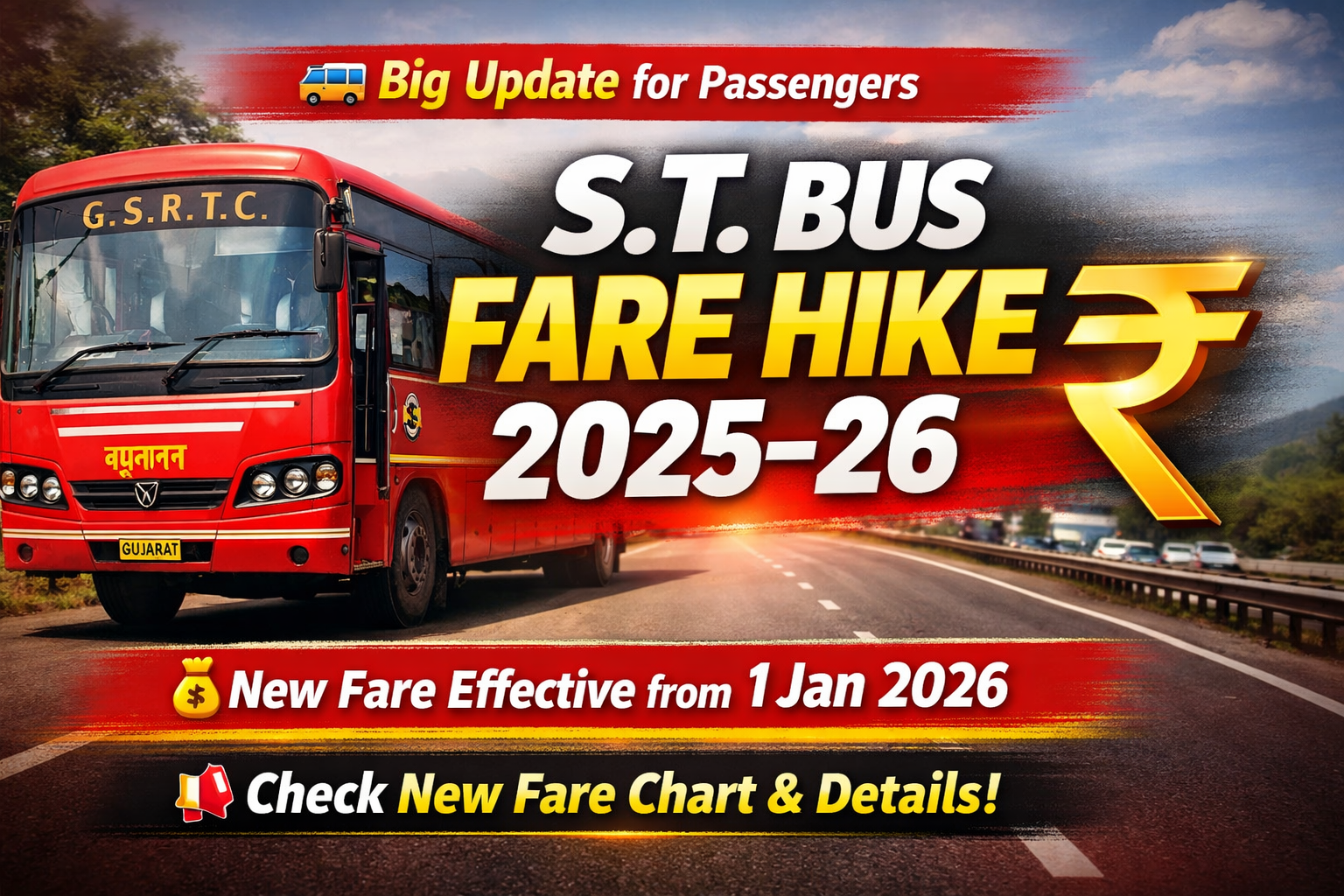
This decision has sparked widespread discussion among passengers, policymakers, and transport unions. This article provides a complete and SEO-friendly explanation of the S.T. bus fare hike 2025–26, including revised fare structures, official notification details, reasons behind the increase, its impact on different passenger groups, and what travelers should expect in the future.
What Is the S.T. Bus Service?
S.T. (State Transport) bus services are operated by government-owned transport corporations to provide affordable, safe, and accessible transportation. In Gujarat, S.T. services are managed by the Gujarat State Road Transport Corporation (GSRTC).
GSRTC operates:
- Ordinary (Local) buses
- Express buses
- Gurjar Nagari buses
- Luxury and Volvo buses
- Electric buses (City and Rural)
These services connect villages, towns, cities, industrial areas, and educational hubs, making S.T. buses a lifeline for common citizens.
S.T. Bus Fare Increase 2025: Official Announcement
According to the official government notification, S.T. bus fares have been revised and approved in 2025, with the revised fares effective from 01 January 2026 .
Key Points of the Fare Revision
- Applies to Ordinary, Express, City, Luxury, Volvo, and Electric buses
- Based on stage kilometers (distance-based fare system)
- Covers rural and urban routes
- Implemented after a gap of several years
The revision replaces the earlier fare structure that was effective till March 2025.
Why Were S.T. Bus Fares Increased?
The fare hike was not a sudden decision. Several economic and operational factors contributed to the revision.
1. Rising Fuel Costs
Diesel prices have increased steadily over the last few years. Since the majority of S.T. buses still run on diesel, fuel expenses have significantly increased operational costs.
2. Maintenance and Fleet Upgradation
- Aging buses require frequent repairs
- Cost of spare parts, tyres, and lubricants has increased
- Introduction of electric and modern buses involves high capital investment
3. Employee Salary and Pension Expenses
Transport corporations employ thousands of drivers, conductors, mechanics, and administrative staff. Revised pay scales, pensions, and benefits have added to financial pressure.
4. Financial Sustainability
Despite high passenger volume, S.T. corporations often operate at a loss due to subsidized fares and social obligations. Fare revision helps reduce losses and maintain service quality.
Revised S.T. Bus Fare Structure (Effective 1 January 2026)
The new fare structure is distance-based (stage kilometers) and varies by bus type. Below is a simplified explanation.
1. Ordinary (Local) Buses
- Lowest fare category
- Suitable for daily commuters and rural passengers
- Minor but consistent increase per stage kilometer
Example:
- Short distance fares increased marginally
- Long-distance fares revised proportionately
2. City and City Point Services
- Used mainly in urban areas
- Fare increase reflects higher operational and congestion costs
3. Express Buses
- Faster services with limited stops
- Moderate fare hike compared to ordinary buses
4. Gurjar Nagari (Non-AC Sleeper/Seater)
- Popular for inter-district and overnight travel
- Fare revised based on distance
- Additional berth charges applicable for sleeper services
5. Luxury, Volvo, AC Seater & AC Sleeper Buses
- Highest fare category
- Still cheaper than most private luxury bus operators
- Fare increase justified due to comfort, AC usage, and maintenance
6. Electric Bus Fares (City & Rural)
- Newer category included in the revised structure
- Slightly higher fares reflecting technology and infrastructure cost
Important: Detailed fare charts are officially published by the transport department and are applicable statewide .
Comparison: Old Fare vs New Fare (2025–26)
| Category | Before Revision | After Revision |
|---|---|---|
| Ordinary Bus | Lower per km | Slightly higher |
| Express Bus | Moderate | Increased |
| Luxury / Volvo | High | Higher |
| Electric Bus | Limited routes | Revised & standardized |
Despite the increase, S.T. buses remain the most affordable public transport option for long and short distances.
Impact of S.T. Bus Fare Hike on Passengers
1. Daily Wage Earners & Workers
For workers who depend on S.T. buses daily, even a small increase adds to monthly expenses. However, S.T. fares are still lower than private transport.
2. Students
Students are among the most affected. Although concession passes continue, base fare increases slightly raise the cost of monthly and quarterly passes.
3. Rural Population
In many villages, S.T. buses are the only transport option. Fare hikes may reduce travel frequency for healthcare, markets, and education.
4. Senior Citizens
Discounts remain available, but total payable amounts increase slightly for long journeys.
Government’s Justification and Assurance
The state government clarified that:
- Fare revision was long overdue
- Service quality would suffer without financial support
- Passenger safety and reliability are priorities
Authorities also assured that:
- Concessions for students and senior citizens will continue
- Rural connectivity will not be reduced
- Electric buses will be expanded to reduce fuel dependency
Public Reaction to the Fare Increase
Public response has been mixed:
- Criticism from students and low-income groups
- Concerns from daily commuters
- Acceptance from some passengers due to inflation realities
Several transport unions and social organizations demanded:
- Special relief for students
- More subsidies instead of fare hikes
How Passengers Can Reduce Travel Costs
Passengers can manage the impact of increased fares by:
- Using monthly or seasonal passes
- Choosing ordinary buses for short distances
- Planning trips efficiently
- Using concessions wherever eligible
- Opting for electric buses where available
Future of S.T. Bus Services After 2026
Experts believe the future of S.T. transport depends on:
- Expansion of electric bus fleets
- Digital ticketing and route optimization
- Increased government subsidy
- Better passenger amenities
Fare revisions may continue periodically unless alternative funding models are introduced.
Conclusion
The S.T. bus fare increase announced in 2025 and effective from 1 January 2026 is a significant step aimed at ensuring the financial stability of state transport services. While it places an additional burden on passengers, especially daily commuters and students, the increase is driven by rising fuel prices, maintenance costs, and operational expenses.
Even after the revision, S.T. buses remain the most economical and accessible mode of transport for the common public. Balanced implementation, continued concessions, and improved service quality will determine public acceptance in the coming years.
SEO Keywords
- S.T. bus fare increase 2025
- ST bus new fare 2026
- GSRTC revised fare chart
- State transport bus fare hike
- ST bus fare notification
